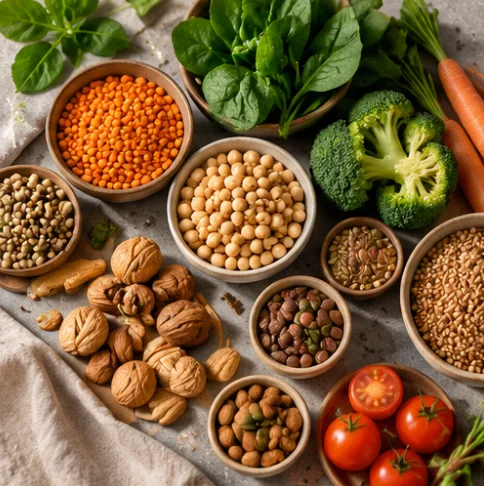
Dietary Guidance to Improve Cardiovascular Health — AHA 2026
Summary ID06-ND-RS-00082
Research Summary
Original Publication
2026 Dietary Guidance to Improve Cardiovascular Health: A Scientific Statement From the American Heart Association
Journal
Circulation, .
- Category
- 06Nutrition & Diet
- Evidence
- Scientific Statement — Evidence Review and Expert Consensus
- Summary Type
- Latest
What Was Studied?
What we eat influences cardiovascular health throughout life. Dietary habits affect blood cholesterol, blood pressure, body weight and glucose regulation. Over time, these factors contribute to the development of cardiovascular disease.
In March 2026, the American Heart Association (AHA) published an updated scientific statement on dietary patterns for cardiovascular health and disease prevention.
The statement replaces the AHA’s 2021 dietary guidance. It draws on established scientific evidence and newer research examining food choices, nutrient sources and cardiovascular outcomes.
The authors also reviewed evidence on replacing foods rich in saturated fats with sources of unsaturated fats.
The publication identifies nine features of a heart-healthy dietary pattern, applicable from childhood through older age. The recommendations are intended for the general population, including people with established cardiovascular disease.
The guidance emphasizes overall dietary patterns, rather than individual foods or nutrients. It also recognizes that healthy eating must accommodate personal preferences, cultural traditions and different eating environments.
The central message is consistent: cardiovascular prevention begins with everyday food choices and benefits from healthy eating habits maintained throughout life.
Key Findings
Maintain a Healthy Body Weight
The AHA recommends balancing energy intake with energy expenditure to achieve and maintain a healthy body weight.
Excess body fat contributes to hypertension, type 2 diabetes and cardiovascular–kidney–metabolic disorders.
Individual energy requirements vary with age, body size, physical activity and other factors. The guidance also emphasizes regular exercise, including muscle-strengthening activities.
Mediterranean, DASH, pescetarian and vegetarian dietary patterns can support weight management when followed consistently.
Some popular weight-loss diets produce short-term weight reduction but have uncertain long-term cardiovascular effects.
Maintaining a healthy body weight supports cardiovascular prevention. The nutritional quality of the diet remains important at every body weight.
Eat Plenty of Vegetables and Fruits
Vegetables and fruits provide dietary fibre, vitamins, minerals and naturally occurring plant compounds.
The AHA recommends eating a wide variety of vegetables and fruits throughout the day.
Whole fruits and vegetables are preferred over juices because they retain fibre and other beneficial components.
Fresh, frozen and canned products can all be appropriate choices, particularly when they contain little or no added sugar or sodium.
Large observational studies consistently associate higher vegetable and fruit consumption with lower risks of cardiovascular disease, coronary heart disease and stroke.
Regular consumption and variety are essential. No single vegetable or fruit provides all the benefits of a plant-rich diet.
Choose Whole Grains Instead of Refined Grains
Whole grains retain the bran, germ and endosperm of the grain. They provide fibre, vitamins, minerals and other biologically active compounds.
Examples include whole wheat, oats, barley, rye, brown rice and quinoa.
Prospective studies associate higher whole-grain consumption with lower risks of cardiovascular disease, stroke and type 2 diabetes.
Randomized feeding trials also demonstrate favourable changes in cardiovascular risk factors when refined grains are replaced with whole grains.
Certain soluble fibres, particularly those found in oats and barley, can lower LDL cholesterol.
Replacing refined grains with whole grains increases fibre intake and supports cardiovascular and metabolic health.
Choose Healthy Sources of Protein
The AHA emphasizes protein sources because the relationship between total protein quantity and cardiovascular health remains uncertain.
The guidance distinguishes several important food groups.
Plant proteins: Beans, lentils, peas and nuts provide protein alongside fibre and other beneficial nutrients. Dietary patterns containing more plant proteins and less red or processed meat are associated with lower cardiovascular risk.
Fish and seafood: Regular consumption of non-fried fish and seafood is associated with lower cardiovascular event and myocardial infarction risk.
These findings should not be confused with evidence on fish-oil supplements. Routine supplementation has not consistently reduced cardiovascular risk in healthy adults and may increase atrial fibrillation risk in some individuals.
Dairy products: The AHA continues to recommend low-fat or fat-free dairy products.
However, the statement acknowledges that evidence demonstrating lower cardiovascular event rates with reduced-fat dairy compared with full-fat dairy remains limited.
Fermented dairy products, including yoghurt and kefir, may influence the gut microbiome, although their long-term cardiovascular effects remain uncertain.
Meat: When red meat is consumed, the AHA recommends lean, unprocessed cuts, smaller portions and less frequent consumption. Processed meat should be minimized.
The cardiovascular implications of protein intake depend substantially on food sources. Replacing red and processed meat with legumes, nuts, fish and other nutritious alternatives is a central recommendation.
Replace Saturated Fats With Unsaturated Fats
The AHA continues to recommend choosing sources of unsaturated fats instead of foods rich in saturated fats.
Butter, animal fats and tropical oils, including coconut and palm oil, contain substantial amounts of saturated fat.
Olive oil, rapeseed oil, soybean oil, nuts and seeds provide unsaturated fats.
Clinical trials consistently demonstrate that replacing saturated fats with polyunsaturated fats lowers LDL cholesterol.
Replacement with monounsaturated fats also reduces LDL cholesterol, although the evidence is less consistent.
Observational studies associate replacing saturated fats with polyunsaturated fats with lower coronary heart disease risk.
The statement specifically examines replacing butter, animal fats and tropical oils with non-tropical vegetable oils.
These substitutions lower LDL cholesterol. Evidence demonstrating that every individual food substitution reduces cardiovascular events or mortality remains more limited.
The AHA also acknowledges uncertainty surrounding comparisons between full-fat and reduced-fat dairy products.
Dietary patterns following the nine recommendations are unlikely to exceed approximately 10% of total energy from saturated fat.
Replacing saturated fats with unsaturated fats, particularly polyunsaturated fats, remains one of the best-supported dietary strategies for lowering LDL cholesterol.
Choose Minimally Processed Foods More Often
The AHA recommends choosing minimally processed foods instead of ultra-processed products whenever practical.
Higher consumption of ultra-processed foods is associated with increased risks of obesity, type 2 diabetes, cardiovascular disease and all-cause mortality.
However, the statement recognizes that food processing can also provide benefits.
Processing can improve food safety, extend shelf life, reduce costs and preserve or add essential nutrients.
The commonly used NOVA classification identifies ultra-processed foods according to processing methods and ingredients, without directly assessing their nutritional composition.
This creates important differences between products within the same category.
The mechanisms linking ultra-processed foods with adverse health outcomes remain incompletely understood.
Choosing minimally processed foods more often supports a heart-healthy dietary pattern. The nutritional composition of individual products remains important.
Minimize Added Sugars
The AHA recommends limiting added sugars in foods and beverages.
Sugar-sweetened beverages are a particularly important source of added sugar.
Systematic reviews associate their consumption with higher risks of obesity, type 2 diabetes, coronary heart disease and cardiovascular mortality.
Very high added-sugar intake has also been associated with substantially higher cardiovascular mortality in observational research.
These findings do not establish that every source of added sugar has identical cardiovascular effects.
Reducing added sugars, particularly from sweetened beverages, is an important component of cardiovascular prevention.
Reduce Sodium Intake and Include Potassium-Rich Foods
Sodium and potassium influence blood pressure in opposite directions.
Higher sodium intake raises blood pressure, while adequate potassium intake can help lower it.
Clinical trials demonstrate that reducing sodium intake lowers blood pressure in people with and without hypertension.
Prospective studies also associate lower sodium intake with a smaller age-related increase in systolic blood pressure and lower cardiovascular risk.
Evidence supporting an independent blood-pressure-lowering effect of potassium is consistent, although less persuasive than the evidence for sodium reduction.
Vegetables, fruits and legumes are important dietary sources of potassium.
Potassium-enriched salt substitutes may provide an additional approach to blood pressure control.
However, they require caution in people with impaired kidney function or reduced potassium excretion.
Reducing sodium intake has strong evidence for lowering blood pressure. Potassium-rich foods may provide additional benefits when clinically appropriate.
Do Not Start Drinking Alcohol for Cardiovascular Protection
The AHA advises people who do not consume alcohol not to begin drinking.
Those who drink alcohol should limit their intake.
Earlier observational studies suggested that low or moderate alcohol consumption might be associated with lower coronary heart disease risk.
However, these findings may reflect differences in lifestyle, socioeconomic factors and other characteristics between drinkers and non-drinkers.
More recent analyses have questioned the proposed cardiovascular benefits.
The relationship between alcohol consumption and blood pressure appears linear and progressive, beginning at the lowest levels of intake.
Alcohol also increases the risk of several cancers.
Heavy drinking and binge drinking carry established cardiovascular and broader health risks.
Alcohol should not be recommended as a strategy for cardiovascular protection or healthy aging.
Why It Matters for Longevity
Cardiovascular disease develops over decades, often before symptoms become apparent.
Dietary habits influence major determinants of long-term health, including LDL cholesterol, blood pressure, glucose regulation and body composition.
The AHA statement emphasizes that heart-healthy eating should begin early in life and continue through older age.
Its recommendations are relevant to longevity because cumulative exposure to elevated cardiovascular risk factors contributes to chronic disease later in life.
A dietary pattern rich in vegetables, fruits, whole grains, legumes, nuts and unsaturated fats supports cardiovascular and metabolic health.
The statement also highlights additional benefits of healthy dietary patterns.
These include adequate intake of essential nutrients, higher dietary fibre consumption and compatibility with dietary recommendations for several chronic diseases.
Fibre supports gastrointestinal function, contributes to a healthy gut microbiome and plays a role in glucose regulation.
Higher fibre intake is associated with lower risks of cardiovascular disease, type 2 diabetes and colorectal cancer.
However, the statement does not demonstrate that following its nine recommendations directly slows biological aging or extends maximum human lifespan.
Its strongest contribution to longevity is the prevention of established cardiovascular risk factors and the maintenance of nutritious eating habits over time.
A heart-healthy dietary pattern provides a practical foundation for healthy aging. Consistent dietary choices can help reduce cumulative cardiovascular risk throughout life.
Clinical Perspective
The 2026 AHA Scientific Statement provides an updated framework for dietary prevention of cardiovascular disease.
Its nine principles remain broadly consistent with the 2021 guidance. This continuity reflects the substantial body of evidence supporting plant-rich dietary patterns, whole grains, unsaturated fats and lower sodium intake.
Several refinements deserve particular attention.
Protein quality matters. The statement emphasizes protein sources and the foods they replace, while acknowledging uncertainty about the relationship between total protein intake and cardiovascular outcomes.
Dietary fat substitution remains a central recommendation. Randomized trials consistently demonstrate LDL cholesterol reduction when saturated fats are replaced with polyunsaturated fats. Evidence concerning specific food substitutions and major cardiovascular events is less extensive.
Dairy recommendations remain cautious. The AHA continues to prefer low-fat and fat-free products while acknowledging that comparisons with full-fat dairy do not provide consistent evidence of differences in cardiovascular events.
The statement also recognizes the limitations of current ultra-processed food classifications and distinguishes the cardiovascular associations of fish consumption from the effects of fish-oil supplementation.
For blood pressure management, sodium reduction has stronger intervention evidence than potassium supplementation.
The updated alcohol guidance reflects growing concern about cardiovascular and cancer risks, alongside uncertainty about previously proposed benefits of moderate drinking.
The publication is an expert synthesis of existing evidence. Its nine principles were not tested together as a single intervention in one randomized clinical trial.
Individualized nutritional assessment remains necessary for people with chronic kidney disease, frailty, malnutrition or other conditions requiring specific dietary management.
The clinical value of AHA 2026 lies in its consistent, food-based approach to cardiovascular prevention and its careful interpretation of areas where the evidence remains uncertain.
Key Takeaway
The 2026 AHA Scientific Statement identifies nine principles of heart-healthy eating, emphasizing vegetables, fruits, whole grains, nutritious protein sources and unsaturated fats. Its guidance supports lifelong cardiovascular prevention while distinguishing established clinical evidence from areas of continuing uncertainty.
Reviewed and Summarized by

Source Publication
- Title:
- 2026 Dietary Guidance to Improve Cardiovascular Health: A Scientific Statement From the American Heart Association
- Authors:
- Lichtenstein AH, Khera A, Anderson CAM, Appel LJ, DeSilva DM, Gardner C, Hu FB, Jones DW, Petersen KS.
- Journal:
- Circulation, March 2026.