Does the Type of Dietary Fat Affect Your Risk of Heart Disease?
Summary ID06-ND-RS-00079
Research Summary
Original Publication
Fatty Acids, Their Food Sources, and Cardiovascular Disease: Current Evidence and Controversies Surrounding the 2025–2030 Dietary Guidelines for Americans
Journal
The Journal of Nutrition, .
- Category
- 06Nutrition & Diet
- Evidence
- Narrative Review of Clinical Trials, Prospective Cohort Studies and Dietary Interventions
- Summary Type
- Latest
What Was Studied?
Not all dietary fats affect cardiovascular health in the same way. Their effects depend on the type of fatty acid, its food source and, importantly, which foods or nutrients it replaces.
In this 2026 review, researchers Qi Sun and Frank B. Hu examined evidence linking dietary fats with cholesterol levels and coronary heart disease.
The authors evaluated controlled feeding trials, prospective observational studies, previous meta-analyses and long-term dietary interventions.
They examined whether replacing saturated fats with unsaturated fats improves cardiovascular health, how different food sources compare, and why dietary recommendations remain controversial.
The review also assessed the 2025–2030 Dietary Guidelines for Americans, particularly their recommendations concerning saturated fat, red meat and full-fat dairy products.
This was a narrative review of existing research, not a new clinical trial or meta-analysis.
Key Findings
Replacing saturated fats with unsaturated fats improves heart health
Controlled dietary trials consistently show that replacing saturated fats with unsaturated fats lowers LDL cholesterol, a major contributor to atherosclerosis.
The benefits are particularly clear when saturated fats are replaced with polyunsaturated fats from vegetable oils, nuts and seeds.
Long-term evidence also supports lower coronary heart disease risk.
A previously published analysis of four major dietary intervention trials, discussed in this review, reported approximately 29% lower coronary heart disease risk when saturated fats were replaced with polyunsaturated fats.
What replaces saturated fat matters
Simply reducing saturated fat is not enough.
Replacing butter or fatty meat with refined starches and added sugars does not provide the same cardiovascular benefits as replacing them with unsaturated fats.
Such substitutions may also worsen triglyceride levels and metabolic health.
Replacing saturated fats with fiber-rich whole grains is more favorable than replacing them with refined carbohydrates.
The key consideration is therefore not only what is removed from the diet, but what takes its place.
Butter, margarine and vegetable oils have different effects
A network meta-analysis of 54 randomized trials found that replacing butter with various vegetable oils lowered LDL cholesterol.
Olive, sunflower and other non-tropical vegetable oils generally produced more favorable cholesterol profiles than butter.
However, margarine requires an important distinction.
Older margarines made with partially hydrogenated oils contained industrial trans fats, which adversely affect cholesterol levels and cardiovascular health.
Some older dietary trials used these products, making their findings difficult to apply to modern margarines.
Contemporary soft vegetable-oil spreads containing mainly unsaturated fats and little saturated fat may provide a healthier fatty acid profile than butter.
However, the review did not directly compare every modern margarine formulation.
Dairy products differ in their cardiovascular effects
Milk, yogurt, cheese and butter differ in fat content, protein, minerals and fermentation.
Clinical studies found lower LDL cholesterol after consuming cheese compared with butter containing similar amounts of saturated fat.
However, cheese may still raise LDL cholesterol compared with certain plant-based alternatives.
The authors emphasize that the health effects of dairy depend on the specific product, its quantity and the foods it replaces.
Moderate dairy consumption can be compatible with a heart-healthy diet.
Omega-3 and omega-6 fatty acids play different roles
Eating fish rich in omega-3 fatty acids is associated with favorable cardiovascular outcomes in observational studies.
However, clinical trials of omega-3 supplements have produced mixed results.
High-dose prescription EPA reduced cardiovascular events in selected high-risk patients, but another trial using an EPA–DHA formulation did not show similar benefits.
These results should not be interpreted as proof that ordinary fish-oil supplements prevent heart disease in everyone.
The review also challenges claims that omega-6-rich seed oils are inherently inflammatory or harmful.
Human studies generally support their cardiovascular benefits when they replace saturated fats.
Food sources and dietary guidelines matter
The authors emphasize that people eat foods, not isolated fatty acids.
Replacing processed meat with nuts, legumes or whole grains is not equivalent to replacing it with refined carbohydrates.
The review also identifies a potential inconsistency in the 2025–2030 Dietary Guidelines for Americans.
Although the guidelines recommend limiting saturated fats to less than 10% of daily energy intake, they also emphasize certain animal foods rich in saturated fat.
The authors argue that clearer recommendations about healthier food substitutions would help resolve this confusion.
Why It Matters for Longevity
Cardiovascular health is an important component of healthy aging.
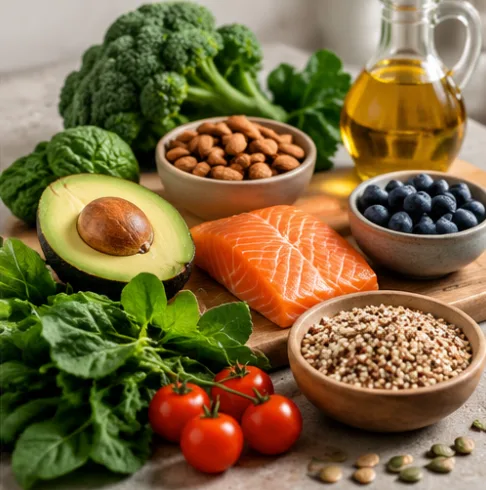
Replacing some butter, animal fats and processed meats with olive oil, other unsaturated vegetable oils, nuts, seeds and legumes can improve dietary quality.
When choosing between butter and margarine, the product’s fatty acid composition matters. A soft vegetable-oil spread rich in unsaturated fats may be preferable to butter for cholesterol management.
Choosing whole grains instead of refined carbohydrates provides additional benefits.
Long-term dietary patterns matter more than individual foods or nutrients.
Clinical Perspective
The review reinforces an established principle of cardiovascular prevention: fat quality matters more than simply reducing total fat intake.
Controlled feeding trials provide strong evidence that replacing saturated fats with unsaturated fats lowers LDL cholesterol.
Evidence for fewer coronary events comes from a smaller number of long-term dietary trials, supported by observational studies.
However, the findings for individual dairy products and omega-3 supplements remain less consistent.
As a narrative review, the publication does not provide a new pooled statistical analysis. It also does not establish that particular dietary fats directly slow biological aging or extend lifespan.
Key Takeaway
Replacing saturated fats with unsaturated fats, particularly from plant-based sources, improves cholesterol levels and can reduce coronary heart disease risk. For healthy aging, choosing healthier fat sources and considering which foods they replace matters more than simply eating less fat. ⸻
Reviewed and Summarized by

Source Publication
- Title:
- Fatty Acids, Their Food Sources, and Cardiovascular Disease: Current Evidence and Controversies Surrounding the 2025–2030 Dietary Guidelines for Americans
- Authors:
- Qi Sun, Frank B. Hu
- Journal:
- The Journal of Nutrition, August 2026.