What Is Dietary Fiber?
Dietary fiber is a type of carbohydrate found mainly in plant foods that our digestive enzymes cannot fully break down.
Unlike sugars and starches, much of it passes through the small intestine without being digested.
Some fiber is fermented by bacteria in the large intestine, while other types help maintain normal bowel movements.
Fiber is important not only for digestion but also for metabolic and cardiovascular health.
Soluble and Insoluble Fiber: What Is the Difference?
Fiber is often divided into two broad groups.
Soluble fiber can dissolve in water. Certain types form a gel-like substance in the digestive tract, helping slow carbohydrate absorption and lower cholesterol.
Oats, barley, beans, apples and psyllium are useful sources.
Insoluble fiber helps increase stool bulk and supports regular bowel movements.
It is found in whole grains, vegetables, nuts and seeds.
Many foods contain both types, and some fibers have properties that do not fit neatly into either category.
How Does Fiber Support the Gut Microbiome?
Our intestines contain trillions of microorganisms, collectively known as the gut microbiome.
Certain types of dietary fiber provide nourishment for beneficial gut bacteria.
When bacteria ferment these fibers, they produce substances called short-chain fatty acids, including butyrate.
These substances help support the intestinal lining and participate in metabolic and immune processes.
Not every fiber is fermented in the same way, so eating a variety of plant foods is useful.
Can Fiber Help Lower Cholesterol and Blood Sugar?
Yes. Certain fibers, particularly soluble, gel-forming types, can help reduce LDL cholesterol.
Some also slow the absorption of carbohydrates, reducing the rise in blood glucose after meals.
Higher-fiber dietary patterns are associated with a lower risk of cardiovascular disease and type 2 diabetes.
These benefits are especially relevant to healthy aging because cardiovascular and metabolic health strongly influence long-term well-being.
How Much Fiber Do We Need?
The World Health Organization recommends that adults consume at least 25 grams of naturally occurring dietary fiber per day.
Some national dietary guidelines recommend approximately 30 grams.
Many adults do not reach these amounts.
A practical way to improve fiber intake is to include whole grains, vegetables, fruit, legumes, nuts and seeds throughout the day.
Which Foods Are Rich in Fiber?
Good everyday choices include:
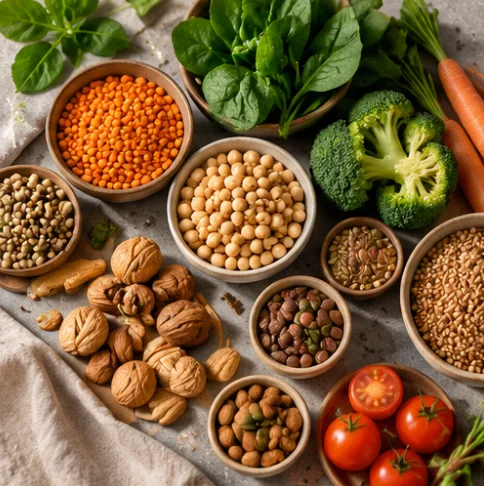
* Legumes: lentils, beans and chickpeas * Whole grains: oats, barley, whole-grain bread and brown rice * Vegetables: broccoli, carrots and leafy vegetables * Fruit: berries, apples and pears * Nuts and seeds: almonds, chia seeds and flaxseeds
Variety is important because different foods provide different fibers and other valuable nutrients.
Should You Take Fiber Supplements?
Fiber supplements, such as psyllium, may help in specific situations, including constipation or cholesterol management.
However, they do not replace the nutritional benefits of a varied diet rich in plant foods.
If you currently eat little fiber, increase your intake gradually and drink adequate fluids to reduce bloating and discomfort.
People with certain gastrointestinal conditions may need individualized advice.
Does Fiber Help Us Live Longer?
Large observational studies consistently associate higher fiber intake with lower risks of several chronic diseases and premature death.
However, these associations do not prove that fiber alone extends lifespan.
The strongest practical message is that fiber-rich foods are an important part of dietary patterns that support long-term health.
Based on Research
World Health Organization. Carbohydrate Intake for Adults and Children: WHO Guideline. WHO, July 2023. https://www.who.int/publications/i/item/9789240073593
European Food Safety Authority (EFSA). Scientific Advice Related to Nutrient Profiling. EFSA Journal, 2022. https://doi.org/10.2903/j.efsa.2022.7259
Continue Exploring
Related Longevity Insights All Longevity Insights Related Research Summaries All Research Summaries