Why Are Antioxidants So Often Linked to Longevity?
Antioxidants are frequently promoted as substances that protect our cells, slow aging and help us live longer.
You may have heard about resveratrol in grapes, polyphenols in olive oil or antioxidants in berries and green tea.
But what do these substances actually do?
To understand their role, we first need to understand oxidative stress.
What Are Free Radicals and Oxidative Stress?
Our cells continuously use oxygen and nutrients to produce energy.
During normal metabolism, they also generate reactive molecules, including free radicals.
Free radicals are molecules with an unpaired electron, which makes many of them highly reactive.
These molecules are not always harmful. In controlled amounts, reactive molecules help cells communicate and support immune defenses.
Problems can arise when reactive molecules are produced in excessive amounts or the body’s protective systems cannot manage them.
This imbalance is called oxidative stress.
Prolonged oxidative stress can damage proteins, fats and DNA. It is involved in several processes associated with aging and chronic disease.
However, oxidative stress is only one part of the complex biology of aging.
What Are Antioxidants?
Antioxidants are substances that help prevent or limit certain types of oxidative damage.
Our bodies produce their own protective enzymes and molecules.
We also obtain antioxidant compounds through food.
Examples include vitamin C, vitamin E, carotenoids and many plant-derived substances.
Antioxidants work through different mechanisms. They do not simply remove every free radical from the body.
In fact, eliminating all reactive molecules would be neither possible nor desirable because some are essential for normal cellular function.
What Are Polyphenols?
Polyphenols are a large group of naturally occurring plant compounds.
Plants produce them for various purposes, including protection against environmental stress.
Polyphenols are found in many everyday foods:
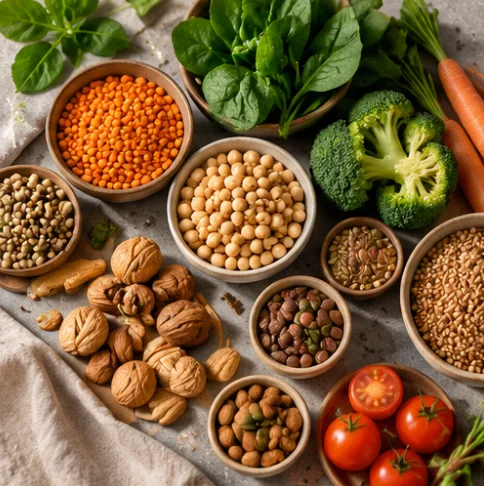
* Berries, grapes and other fruits * Vegetables and legumes * Olive oil * Tea and coffee * Cocoa and dark chocolate * Nuts and certain herbs
Different foods contain different types of polyphenols.
These include flavonoids, phenolic acids and stilbenes.
Their biological effects are complex and may involve inflammation, metabolism and cellular signaling.
Resveratrol, Quercetin and Other Popular Compounds
Some individual polyphenols have attracted considerable attention in longevity research.
Resveratrol, found in grapes and some other plants, has been studied for its effects on cellular pathways associated with aging.
Quercetin, present in foods such as onions, apples and berries, has been investigated for antioxidant and anti-inflammatory properties.
Catechins, found in tea, are another widely studied group.
Laboratory and animal experiments have identified potentially interesting biological effects.
However, these findings do not establish that taking concentrated supplements slows human aging or extends lifespan.
The amounts used in experiments may also differ substantially from those obtained through ordinary food.
Do Antioxidant Supplements Slow Aging?
This is an important distinction.
Foods rich in naturally occurring antioxidant compounds are commonly part of healthy dietary patterns.
However, taking high-dose antioxidant supplements is not equivalent to eating those foods.
Large clinical trials have not established that routine antioxidant supplementation extends human lifespan.
Some high-dose supplements may even cause harm in particular populations.
For example, beta-carotene supplementation has increased lung cancer risk in trials involving people who smoke or have substantial asbestos exposure.
More antioxidant activity is therefore not automatically better.
Why Are Whole Foods Different?
A blueberry, an olive or a cup of tea contains many substances that interact within a complex food matrix.
These include fiber, vitamins, minerals and numerous plant compounds.
A concentrated supplement usually contains only one or a few isolated substances.
This difference may help explain why the health effects associated with plant-rich dietary patterns cannot simply be reproduced by taking antioxidant pills.
It is also difficult to determine which individual compound is responsible for an observed benefit.
What Does This Mean for Healthy Aging?
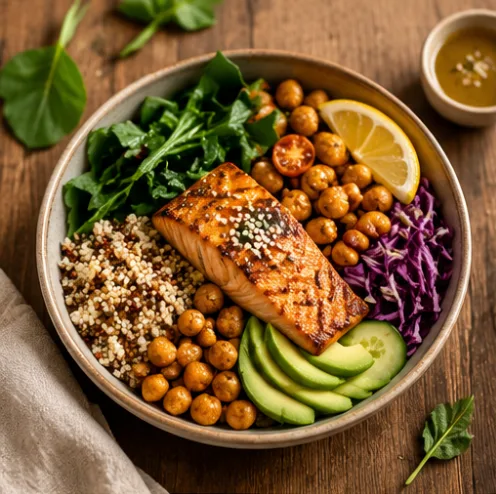
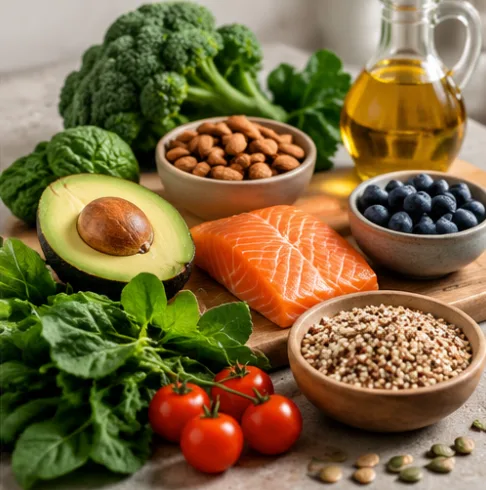
A diet rich in vegetables, fruit, legumes, nuts and other plant foods provides a wide variety of polyphenols and essential nutrients.
These foods can contribute to cardiovascular and metabolic health, which are important for healthy aging.
However, claims that a particular antioxidant or polyphenol can reverse biological aging should be treated cautiously.
Scientific interest in these compounds is justified, but convincing evidence of lifespan extension in humans is still lacking.
Based on Research
Sies H, Jones DP. Reactive oxygen species (ROS) as pleiotropic physiological signalling agents. Nature Reviews Molecular Cell Biology, 2020. https://doi.org/10.1038/s41580-020-0230-3
Bjelakovic G, Nikolova D, Gluud C. Antioxidant Supplements and Mortality. Current Opinion in Clinical Nutrition and Metabolic Care, 2014. https://pubmed.ncbi.nlm.nih.gov/24632991/
National Institutes of Health, Office of Dietary Supplements. Dietary Supplements for Exercise and Athletic Performance / Antioxidants and Health Information. https://ods.od.nih.gov/