Why Nutrition Matters as We Age
Every day, our bodies need energy and nutrients to function.
We need them to maintain muscles, support the immune system, repair tissues and keep our brain and other organs working normally.
These needs continue throughout life, but their importance becomes especially clear as we grow older.
Good nutrition is not simply about eating less, avoiding certain foods or taking supplements.
It is about providing the body with what it needs to remain healthy and functional.
What Are Nutrients?
Nutrients are substances in food that our bodies use for energy, growth, maintenance and normal biological processes.
They are commonly divided into two groups:
Macronutrients are needed in relatively large amounts. They include carbohydrates, proteins and fats.
Micronutrients are needed in much smaller amounts. They include vitamins and minerals.
Water is also essential for life.
Each has a different role, and a balanced diet provides them together.
Carbohydrates: An Important Source of Energy
Carbohydrates provide energy for the body, including the brain and muscles.
They include sugars, starches and dietary fiber.
Sugars and starches can be broken down into glucose, which cells use for energy.
Dietary fiber is different. Much of it is not digested by human enzymes, but it supports intestinal function and can help regulate blood glucose and cholesterol.
Carbohydrates are found in foods such as fruit, vegetables, legumes, grains, bread, rice and potatoes.
The quality of these foods matters.
Whole grains, legumes and vegetables provide fiber and additional nutrients, while sugary drinks and highly refined products generally offer fewer nutritional benefits.
Proteins: Maintaining Muscles and Tissues
Proteins are made from smaller building blocks called amino acids.
The body uses them to maintain muscles, repair tissues and produce enzymes, hormones and other essential substances.
Protein becomes particularly important with age because muscle mass and strength tend to decline over time.
Adequate protein intake, together with regular resistance exercise, helps support muscle maintenance.
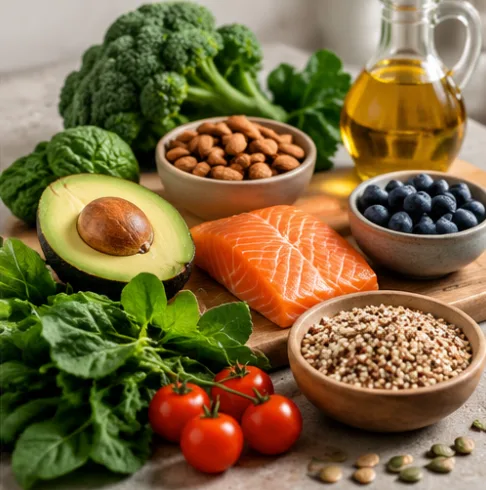
Sources include fish, eggs, dairy products, meat, legumes, soy products, nuts and seeds.
Both animal and plant foods can contribute to meeting protein needs.
Fats: Essential for Cells and Normal Body Function
Fats provide energy and are important components of cell membranes.
They also help the body absorb vitamins A, D, E and K.
However, different fats have different effects on health.
Unsaturated fats, found in foods such as olive oil, nuts, seeds and fish, are generally preferred over excessive amounts of saturated fats.
Saturated fats are found in foods such as butter, fatty meats and some dairy products.
Replacing some saturated fats with unsaturated fats can help improve blood cholesterol levels.
The goal is not to eliminate fat, but to choose healthier sources.
Vitamins and Minerals: Small Amounts, Essential Functions
Vitamins and minerals are required for numerous processes throughout the body.
For example, calcium and vitamin D contribute to bone health, vitamin B12 supports normal nervous system function, and iron is essential for transporting oxygen in the blood.
Different nutrients have different functions, and deficiencies can cause health problems.
However, more is not always better.
Taking high doses of vitamins or minerals without a medical indication does not necessarily improve health and can sometimes cause harm.
For most people, a varied diet is the foundation of adequate micronutrient intake.
What Are Calories?
A calorie is a unit of energy.
Food provides energy, and the body uses it for breathing, circulation, movement, temperature regulation and countless other processes.
When energy intake regularly exceeds energy expenditure, excess energy may be stored, contributing to weight gain.
However, calories alone do not describe nutritional quality.
Two meals may contain the same number of calories but provide very different amounts of protein, fiber, vitamins and minerals.
For healthy aging, both energy balance and nutrient quality matter.
Why Does Nutrition Change With Age?
As people grow older, their energy needs may decrease, particularly when physical activity and muscle mass decline.
Yet their need for many essential nutrients remains similar or may even increase.
This creates an important challenge: obtaining sufficient nutrients without necessarily consuming more calories.
Reduced appetite, dental problems, certain medications and medical conditions can make adequate nutrition more difficult.
Unintentional weight loss and inadequate protein intake can also contribute to muscle weakness and reduced physical function.
Healthy aging therefore requires attention not only to weight, but also to nutritional status and muscle health.
What Does Balanced Nutrition Really Mean?
Balanced nutrition does not require a perfect diet.
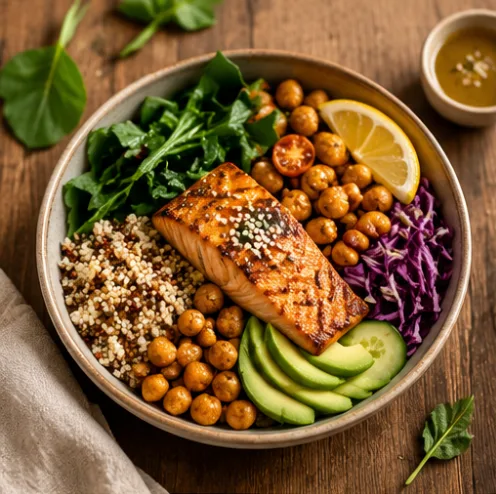
It means regularly choosing foods that provide sufficient energy, protein, fiber, healthy fats, vitamins and minerals.
Variety is important because no single food supplies everything the body needs.
A sustainable eating pattern, adapted to individual health needs and preferences, is more useful than following restrictive dietary trends.
Based on Research
World Health Organization. Healthy Diet. WHO Fact Sheet, 2026. https://www.who.int/news-room/fact-sheets/detail/healthy-diet
European Food Safety Authority. Dietary Reference Values for Nutrients. https://www.efsa.europa.eu/en/topics/topic/dietary-reference-values
Volkert D, Beck AM, Cederholm T, et al. ESPEN practical guideline: Clinical nutrition and hydration in geriatrics. Clinical Nutrition, 2022. https://doi.org/10.1016/j.clnu.2022.01.024