Three Diets With Much in Common
The Mediterranean, DASH and MIND diets are frequently mentioned in discussions about healthy aging and brain health.
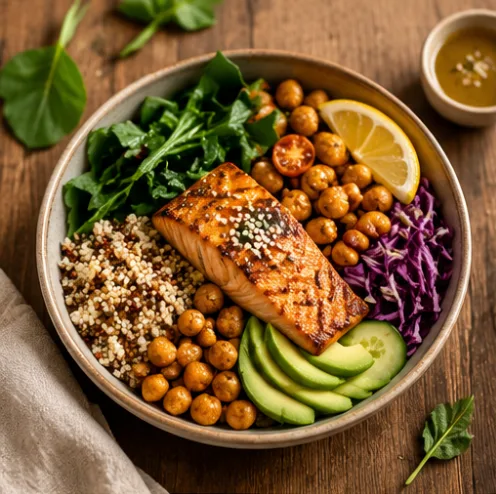
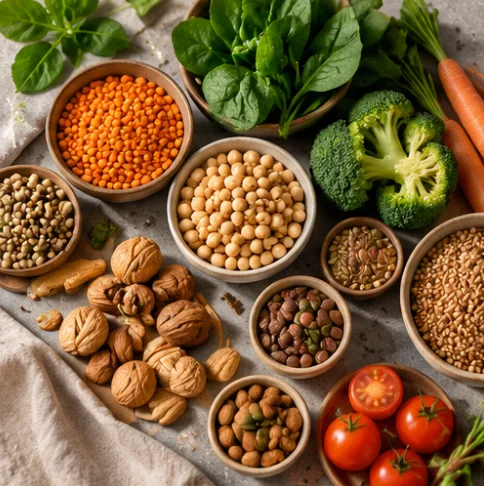
All three encourage vegetables, whole grains, legumes and nuts while limiting foods high in saturated fat.
However, they were developed with different priorities.
Understanding these differences can help you choose an eating pattern that supports your health and fits your everyday life.
Mediterranean Diet: A Flexible, Traditional Eating Pattern
The Mediterranean diet is inspired by traditional eating habits in countries around the Mediterranean Sea.
It emphasizes vegetables, fruit, legumes, whole grains, olive oil, nuts and fish.
Red and processed meat are generally eaten less frequently.
One of its strengths is flexibility. It can be adapted to different cuisines and food preferences.
Mediterranean-style eating has substantial evidence supporting cardiovascular health.
Observational studies have also associated greater adherence with modestly better cognitive performance, although its effects on cognitive decline over time remain less certain.
DASH Diet: Developed to Support Healthy Blood Pressure
DASH stands for Dietary Approaches to Stop Hypertension.
It was originally developed to help lower blood pressure.
The DASH diet emphasizes vegetables, fruit, whole grains, low-fat dairy products, legumes and nuts.
It also recommends limiting sodium and saturated fat.
Its relevance to brain health is partly related to the connection between blood pressure and the brain.
Long-term high blood pressure can damage blood vessels, including those supplying brain tissue.
A dietary pattern that supports healthy blood pressure can therefore contribute to a broader strategy for maintaining vascular and cognitive health.
However, benefits for blood pressure do not automatically establish that DASH prevents dementia.
MIND Diet: Developed Specifically for Brain Health
MIND stands for Mediterranean-DASH Intervention for Neurodegenerative Delay.
It combines elements of Mediterranean and DASH eating patterns.
The MIND diet places particular emphasis on:
* Green leafy vegetables * Berries * Nuts and legumes * Whole grains * Olive oil * Fish
It also encourages limiting butter, full-fat cheese, red and processed meat, pastries and fried foods.
Its distinguishing feature is its specific focus on cognitive aging.
However, being designed for brain health does not necessarily mean that its ability to prevent cognitive decline has been proven.
What Does the Research Actually Show?
A large international analysis published in 2026 examined seven dietary patterns using data from more than 17,000 adults across eight longitudinal studies in Europe and the United States.
A longitudinal study follows the same people over time, allowing researchers to examine changes in health or cognitive performance.
Mediterranean-style eating was associated with slightly better overall cognitive performance.
Mediterranean and DASH dietary scores were also associated with modestly better executive function, which includes abilities such as planning, organizing and mental flexibility.
The MIND diet showed a small favorable association with changes in executive function over time in three United States cohorts.
However, the overall evidence that these dietary patterns consistently slowed cognitive decline was limited.
An important randomized clinical trial published in the New England Journal of Medicine in 2023 provides additional perspective.
Over three years, participants following the MIND diet did not experience significantly better cognitive outcomes than those following a comparison diet that also involved dietary counseling and mild calorie restriction.
This does not mean that MIND is an unhealthy diet. It means that its specific advantage for preventing cognitive decline has not been established.
Which Diet Should You Choose?
There is currently insufficient evidence to conclude that one of these three diets is universally superior for preserving memory or preventing cognitive decline.
The most practical choice depends on your priorities.
Mediterranean: A flexible option for people seeking a sustainable, heart-healthy eating pattern.
DASH: Particularly useful for people who want a structured dietary approach to blood pressure management.
MIND: An option for people interested in a dietary pattern developed around brain-health research, while recognizing the limitations of the evidence.
The shared principles matter more than the labels.
All three encourage nutritious plant foods and healthier fats while limiting foods that can contribute to poor cardiovascular and metabolic health.
The Best Diet Is One You Can Maintain
A diet is only useful if it can become part of your life.
Consider your preferences, medical conditions, cultural habits and the foods available to you.
A balanced eating pattern that supports cardiovascular and metabolic health is a sensible foundation for healthy aging.
For brain health, it should be combined with physical activity, adequate sleep, social engagement and appropriate management of cardiovascular risk factors.
Rather than searching for one perfect diet, focus on habits that you can maintain over many years.
Based on Research
Soldevila-Domenech N, Ayala-Garcia A, Zhou X, et al. Diet and Cognitive Function in Aging: An Individual Participant Data Meta-Analysis from 8 Cohorts in Europe and the United States. The Journal of Nutrition, September 2026. https://jn.nutrition.org/article/S0022-3166(26)00343-3/fulltext
Barnes LL, Dhana K, Liu X, et al. Trial of the MIND Diet for Prevention of Cognitive Decline in Older Persons. New England Journal of Medicine, August 2023. https://www.nejm.org/doi/full/10.1056/NEJMoa2302368