Is There One Best Diet for Healthy Aging?
Summary ID06-ND-RS-00007
Research Summary
Original Publication
Diet Strategies for Promoting Healthy Aging and Longevity: An Epidemiological Perspective
Journal
Journal of Internal Medicine, .
- Category
- 06Nutrition & Diet
- Evidence
- Narrative Review
- Summary Type
- Advanced
What Was Studied?
Diet is one of the most important modifiable factors influencing healthy aging. Yet one question continues to generate debate:
Is there one best diet for living a longer and healthier life?
In this comprehensive review, Professor Frank B. Hu examined decades of epidemiological research to identify which dietary strategies are consistently associated with healthier aging and increased longevity. Rather than evaluating a single diet, the review compared the evidence behind several well-known eating patterns, including the Mediterranean, DASH, Nordic and Okinawan diets, as well as healthy plant-based dietary patterns.
The review also explored a broader question. Are the health benefits explained by one specific diet, or do these dietary patterns share common principles that protect health regardless of culture or geography? The author also examined how nutrition interacts with body weight, physical activity and other lifestyle factors, recognizing that healthy aging is influenced by the overall lifestyle rather than by diet alone, and which traditional or contemporary dietary patterns are most consistently associated with lower mortality and a longer healthspan.
This narrative review also examined how long-term dietary habits influence chronic disease, healthy aging and longevity. Rather than analyzing a single intervention, Professor Frank B. Hu integrated evidence primarily from large prospective cohort studies, supported by selected clinical and experimental research.
Finally, the review discussed how dietary recommendations should be adapted to individual preferences, cultural traditions and the changing nutritional needs of older adults.
Key Findings
The review found no single "perfect" longevity diet. Instead, the strongest evidence suggests that different healthy dietary patterns share many of the same characteristics.
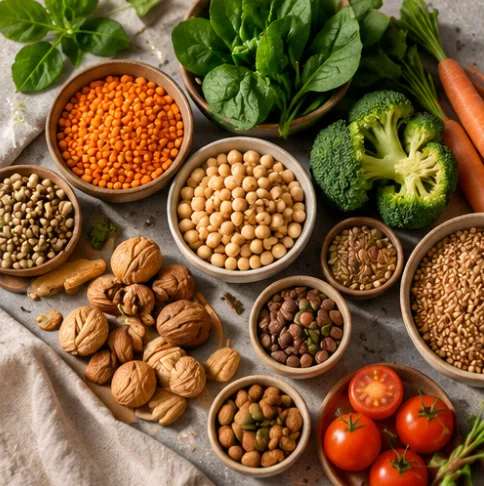
These diets are consistently rich in vegetables, fruits, whole grains, legumes, nuts and healthy sources of unsaturated fat, while limiting refined carbohydrates, sugary drinks, processed foods and red or processed meat. The review concludes that dietary quality is more important than focusing narrowly on the percentage of calories derived from fat, carbohydrate or protein.
One of the review's most important messages is that the quality of food matters more than the precise balance of carbohydrates, fats and proteins. Choosing minimally processed, nutrient-rich foods has a far greater impact on long-term health than focusing on individual nutrients or popular dietary trends.
The review also highlights the importance of maintaining a healthy body weight throughout adult life. In modern societies, preventing obesity may provide many of the health benefits that have traditionally been attributed to calorie restriction.
Importantly, nutrition should never be viewed in isolation. The greatest improvements in disease-free life expectancy are seen when a healthy diet is combined with regular physical activity, avoidance of smoking and maintenance of a healthy weight. When a healthy diet is combined with physical activity, smoking avoidance and healthy body weight, disease-free life expectancy may be extended by approximately 8–10 years.
Why It Matters for Longevity
The findings move the discussion away from searching for one perfect "longevity diet."
Healthy aging does not depend on following one fashionable eating plan. Instead, it depends on building healthy eating habits that can be maintained for life.
Nutrition is much more than a source of calories. It influences metabolism, inflammation, cardiovascular health, and many of the biological processes involved in aging.
For longevity medicine, the message is clear. Long-term adherence to a high-quality dietary pattern matters more than strict loyalty to any single named diet. The focus should be on sustainable eating habits supported by strong scientific evidence.
Clinical Perspective
This review reinforces one of the central principles of longevity medicine: the best diet is the one that is both evidence-based and sustainable over many years.
For clinicians, the focus should move beyond recommending individual nutrients or restrictive diets. Greater attention should be given to improving the overall quality of the diet, helping patients achieve and maintain a healthy weight, and integrating nutrition with physical activity and other healthy lifestyle behaviours.
The findings also support a personalised approach to nutrition. Dietary recommendations should respect an individual's medical conditions, age, culture and food preferences while remaining grounded in scientific evidence.
Ultimately, successful nutritional counselling is not about helping patients follow the "perfect" diet. It is about helping them build eating habits they can maintain for decades.
Key Takeaway
There is no single universally superior longevity diet. The strongest evidence supports a sustainable high-quality eating pattern rich in minimally processed plant foods and healthy fats, with limited refined carbohydrates, sugary drinks, and red and processed meat - adapted to the individual’s culture, health and nutritional needs.
Reviewed and Summarized by

Source Publication
- Title:
- Diet Strategies for Promoting Healthy Aging and Longevity: An Epidemiological Perspective
- Authors:
- Frank B. Hu
- Journal:
- Journal of Internal Medicine, 24 October 2023.